You have learnt about mixtures in your lower classes. Most of the substances that we encounter in our daily life are mixtures of two or more substances. The substances present in a mixture may exist in one or more physical state. For example, when we burn wood, the smoke released is a mixture of solid carbon and gases like CO₂, CO.
In some cases of mixtures, their components can be separated easily whereas in some other cases they cannot be. Consider the two mixtures, one which contains salt and water, and the another which contains sand and water. Water is the one of the components in both the mixtures. In the first case salt dissolves in water. In the second case the sand does not dissolve in water. Sand in water can be separated by filtration but salt cannot be separated as it dissolves in water to form a homogeneous mixture. This kind of homogenous mixtures are termed as solutions.
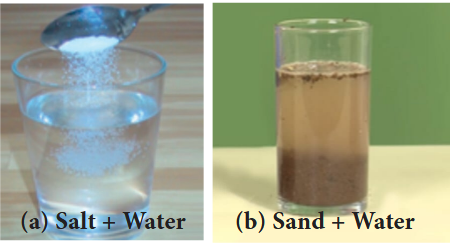
a) Homogeneous mixture b) Heterogeneous mixture#
SOLUTIONS IN DAY-TO-DAY LIFE#
One of the naturally existing solutions is sea water. We cannot imagine life on earth without sea water. It is a mixture of many dissolved salts. The another one is air. It is a mixture of gases like nitrogen, oxygen, carbon dioxide and other gases.
All the life forms on the earth are associated with solutions. Plants take solutions of nutrients for their growth from the soil. Most of the liquids found in human body including blood, lymph and urine are solutions. Day to day human activities like washing, cooking, cleaning and few other activities involve the formation of solutions with water. Similarly, the drinks what we take, like fruit juice, aerated drinks, tea, coffee etc. are also solutions. Therefore, the ability of water to form solutions is responsible for sustenance of life.
COMPONENTS OF SOLUTIONS#
We know that, a solution is a homogeneous mixture of two or more substances. In a solution, the component which is present in lesser amount (by weight), is called solute and the component, which is present in a larger amount (by weight) is called solvent. The solute gets distributed uniformly throughout the solvent and thus forming the mixture homogeneous. So, the solvent acts as a dissolving medium in a solution. The process of uniform distribution of solute into solvent is called dissolution.
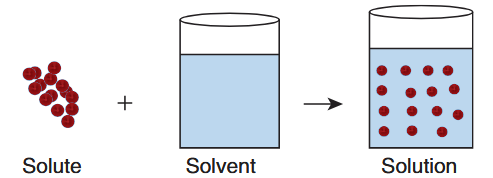
Conceptual Thoughts All solutions are mixtures; but all mixtures are not solutions. Why?
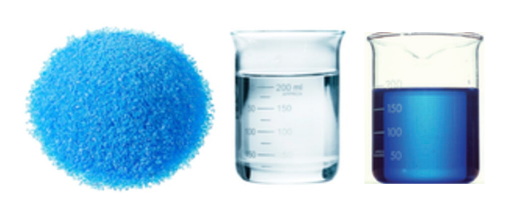
A solution must at least be consisting of two components (a solute and a solvent). Such solutions which are made of one solute and one solvent (two components) are called binary solutions. e.g. On adding copper sulphate crystals to water, it dissolves in water forming a solution of copper sulphate. It contains two components i.e. one solute-copper sulphate and one solvent-water. So it is a binary solution.
Similarly, a solution may contain more than two components. For example if salt and sugar are added to water, both dissolve in water forming a solution. Here two solutes are dissolved in one solvent. Such kind of solutions which contain three components are called ternary solutions.
TYPES OF SOLUTIONS#
Based on the physical state of the solute and the solvent#
We know that substances normally exist in three physical states (phases) i.e., solid, liquid and gas. In binary solutions, both the solvent and solute may exist in any of these physical states. But the solvent constitutes the major part of the solution. Its physical state is the primary factor which determine the characteristics of the solution.
Table 9.1 Types of binary solutions
| Solute | Solvent | Example |
|---|---|---|
| Solid solution | ||
| Solid | Solid | Copper dissolved in gold (Alloys) |
| Liquid | Solid | Mercury with sodium (amalgam) |
| Liquid solution | ||
| Solid | Liquid | Sodium chloride dissolved in water |
| Liquid | Liquid | Ethyl alcohol dissolved in water |
| Gas | Liquid | Carbon-di-oxide dissolved in water (Soda water) |
| Gaseous solution | ||
| Liquid | Gas | Water vapour in air (cloud) |
| Gas | Gas | Mixture of Helium-Oxygen gases |
Based on the type of solvent#
Most of the substances are soluble in water. That is why, water is called as ‘Universal solvent’. However some substances do not dissolve in water. Therefore, other solvents such as ethers, benzene, alcohols etc., are used to prepare a solution.
On the basis of type of solvent, solutions are classified into two types:
- Aqueous solutions
- Non-aqueous solutions
a) Aqueous solution:#
The solution in which water acts as a solvent is called aqueous solution.
- E.g. Common salt in water, Sugar in water, Copper sulphate in water
b) Non-Aqueous solution:#
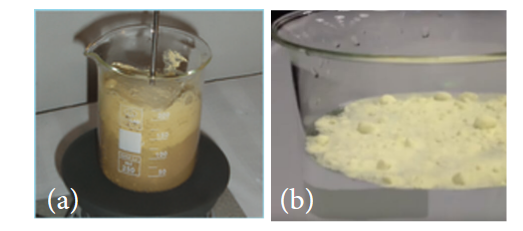
The solution in which any liquid, other than water, acts as a solvent is called non-aqueous solution. Solvent other than water is referred to as non-aqueous solvent. Generally, alcohols, benzene, ethers, carbon disulphide, acetone, etc., are used as non-aqueous solvents.
- Examples for non-aqueous solutions: Sulphur dissolved in carbon disulphide, Iodine dissolved in carbon disulphide
Based on the amount of solute#
The amount of the solute that can be dissolved in the given amount of solvent is limited under any given conditions. Based on the amount of solute, in the given amount of solvent, solutions are classified into the following types:
- Saturated solution
- Unsaturated solution
- Super saturated solution
(i) Saturated solution: A solution in which no more solute can be dissolved in a definite amount of the solvent at a given temperature is called saturated solution.
- e.g. 36g of sodium chloride in 100g of water at 25°C forms saturated solution. Further addition of sodium chloride, leave it undissolved.
(ii) Unsaturated solution: Unsaturated solution is one that contains less solute than that of the saturated solution at a given temperature.
- e.g. 10g or 20g or 30g of Sodium chloride in 100g of water at 25°C forms an unsaturated solution.
(iii) Super saturated solution: Supersaturated solution is one that contains more solute than the saturated solution at a given temperature.
- e.g. 40g of sodium chloride in 100g of water at 25°C forms super saturated solution. This state can be achieved by altering any other conditions like temperature, pressure. Super saturated solutions are unstable, and the solute is reappearing as crystals when the solution is disturbed.
Conceptual Thoughts You are given two samples of solutions of NaCl. Can you identify which one is saturated? and How?
Concentrated and dilute solutions#
It is another kind of classification of unsaturated solutions. It expresses the relative concentration of two solutions with respect to their solutes present in the given amount of the solvent.
For example, you are given two cups of tea. When you taste them, you feel that one is sweeter than the other. What do you infer from it? The tea which sweet more contains higher amount of sugar than the other.
When we compare two solutions having same solute and solvent, the one which contains higher amount of solute per the given amount of solvent is said to be ‘concentrated solution’ and the another is said to be ‘dilute solution’.
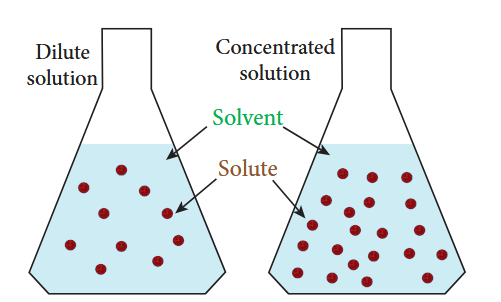
Differentiating solutions as dilute and concentrated is a qualitative representation. It does not imply the quantity of the solute. This difference is observed by means of some physical characteristics such as colour, density, etc.
SOLUBILITY#
Usually, there is a limit to the amount of solute that can be dissolved in a given amount of solvent at a given temperature. When this limit is reached, we have a saturated solution and any excess solute that is added, simply settle down at the bottom of the solution.
The extent of dissolution of a solute in a solvent can be better explained by its solubility. Solubility is a measure of how much of a solute can be dissolved in a specified amount of a solvent.
Solubility is defined as the number of grams of a solute that can be dissolved in 100g of a solvent to form its saturated solution at a given temperature and pressure.
For example, 36g of sodium chloride need to be dissolved in 100g of water to form its saturated solution at 25°C. Thus the solubility of NaCl in water is 36g at 25°C.
The solubility is mathematically expressed as:
$$ \text{Solubility} = \frac{\text{Mass of the solute}}{\text{Mass of the solvent}} \times 100 $$Table 9.2 Solubilities of some common substances in water at 25°C
| Name of the solute | Formula of the solute | Solubility g/100 g water |
|---|---|---|
| Calcium carbonate | CaCO₃ (s) | 0.0013 |
| Sodium chloride | NaCl (s) | 36 |
| Ammonia | NH₃ (g) | 48 |
| Sodium hydroxide | NaOH (s) | 80 |
| Glucose | C₆H₁₂O₆ (s) | 91 |
| Sodium bromide | NaBr (s) | 95 |
| Sodium iodide | NaI (s) | 184 |
Factors affecting solubility#
There are three main factors which govern the solubility of a solute. They are:
- Nature of the solute and solvent
- Temperature
- Pressure
(i) Nature of the solute and solvent#
The nature of the solute and solvent plays an important role in solubility. Although water dissolves an enormous variety of substances, both ionic and covalent, it does not dissolve everything. The phrase that scientists often use when predicting solubility is “like dissolves like.” This expression means that dissolving occurs when similarities exist between the solvent and the solute.
- Example: Common salt is a polar compound and dissolves readily in polar solvent like water.
- Non-polar compounds are soluble in non-polar solvents. For example, Fat dissolved in ether.
- But non-polar compounds, do not dissolve in polar solvents; polar compounds do not dissolve in non-polar solvents.
(ii) Effect of Temperature#
Solubility of Solids in Liquid: Generally, solubility of a solid solute in a liquid solvent increases with increase in temperature. For example, a greater amount of sugar will dissolve in warm water than in cold water.
- In endothermic process, solubility increases with increase in temperature.
- In exothermic process, solubility decreases with increase in temperature.
Solubility of Gases in liquid: Do you know why is it bubbling when water is boiled? Solubility of gases in liquid decrease with increase in temperature. Generally, water contains dissolved oxygen. When water is heated, the solubility of oxygen in water decreases, so oxygen escapes in the form of bubbles.
Aquatic animals live more in cold regions because, more amount of dissolved oxygen is present in the water of cold regions. This shows that the solubility of oxygen in water is more at low temperatures.
(iii) Effect of Pressure#
Effect of pressure is observed only in the case of solubility of a gas in a liquid. When the pressure is increased, the solubility of a gas in liquid increases.
The common examples for solubility of gases in liquids are carbonated beverages, i.e. soft drinks, household cleaners containing aqueous solution of ammonia, formalin-aqueous solution of formaldehyde.
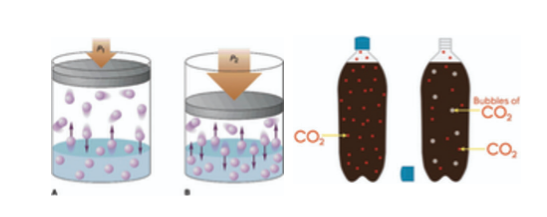
Effect of pressure on solubility
More to know The effect of pressure on the solubility of a gas in liquid is given by Henry’s law. It states that, the solubility of a gas in a liquid is directly proportional to the pressure of the gas over the solution at a definite temperature.
CONCENTRATION OF A SOLUTION#
So far, we discussed what is a solution? what does it consist of and its types. Most of the chemical reactions take place in solutions form. So it is essential to quantify the solute in solvent to study the reactions.
Concentration of a solution may be defined as the amount of solute present in a given amount of solution or solvent.
Quantitatively, concentration of a solution may be expressed in different methods. But here, we shall discuss:
- Percentage by mass (% mass)
- Percentage by volume (% volume)
Mass percentage#
Mass percentage of a solution is defined as the percentage by mass of the solute present in the solution. It is mostly used when solute is solid and solvent is liquid.
$$ \text{Mass Percentage} = \frac{\text{Mass of the solute}}{\text{Mass of the solution}} \times 100 $$or
$$ \text{Mass Percentage} = \frac{\text{Mass of the solute}}{\text{Mass of the solute} + \text{Mass of the solvent}} \times 100 $$For example: 5% sugar solution (by mass) means 5g of sugar in 95g of water. Hence it is made 100g of solution.
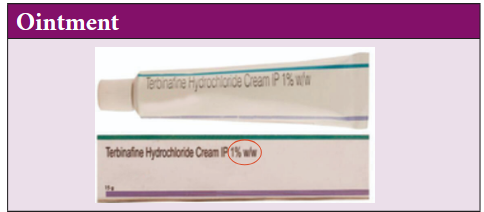
Usually, mass percentage is expressed as w/w (weight/weight); mass percentage is independent of temperature.
Volume percentage#
Volume percentage is defined as the percentage by volume of solute (in ml) present in the given volume of the solution.
$$ \text{Volume Percentage} = \frac{\text{Volume of the solute}}{\text{Volume of the solution}} \times 100 $$or
$$ \text{Volume Percentage} = \frac{\text{Volume of the solute}}{\text{Volume of the solute} + \text{volume of the solvent}} \times 100 $$For example, 10% by volume of the solution of ethanol in water, means 10ml of ethanol in 100ml of solution (or 90ml of water)
Usually volume percentage is expressed as v/v (volume/volume). It is used when both the solute and solvent are liquids. Volume percentage decreases with increases in temperature, because of expansion of liquids.
You can notice that in the commercial products that we come across in our daily life such as a solution of syrups, mouth wash, antiseptic solution, household disinfectants etc., the concentration of the ingredients is expressed as v/v. Similarly, in ointments, antacid, soaps, etc., the concentration of solutions are expressed as w/w.
HYDRATED SALTS AND WATER OF CRYSTALLIZATION#
When ionic substances are dissolved in water to make their saturated aqueous solution, their ions attract water molecules which then attached chemically in certain ratio. This process is called hydration. These ionic substances crystallize out from their saturated aqueous solution with a definite number of molecules of water. The number of water molecules found in the crystalline substance is called water of crystallization. Such salts are called hydrated salts.
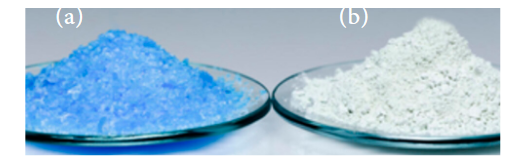
On heating these hydrated crystalline salts, they lose their water of crystallization and become amorphous or lose their colour (if they are coloured).
Table 9.3 Hydrated salts
| Common Name | IUPAC Name | Molecular Formula |
|---|---|---|
| Blue Vitriol | Copper (II) sulphate pentahydrate | CuSO₄·5H₂O |
| Epsom Salt | Magnesium sulphate heptahydrate | MgSO₄·7H₂O |
| Gypsum | Calcium sulphate dihydrate | CaSO₄·2H₂O |
| Green Vitriol | Iron (II) sulphate heptahydrate | FeSO₄·7H₂O |
| White Vitriol | Zinc sulphate heptahydrate | ZnSO₄·7H₂O |
Copper sulphate pentahydrate CuSO₄·5H₂O (Blue vitriol)#
The number of water molecules in blue vitriol is five. So its water of crystallization is 5. When blue coloured copper sulphate crystals are gently heated, it loses its five water molecules and becomes colourless anhydrous copper sulphate.
$$ \text{CuSO}_4 \cdot 5\text{H}_2\text{O} \underset{\text{Cooling}}{\stackrel{\text{Heating}}{\rightleftharpoons}} \text{CuSO}_4 + 5\text{H}_2\text{O} $$(Copper sulphate pentahydrate) → (Anhydrous copper sulphate) Blue colour → colourless
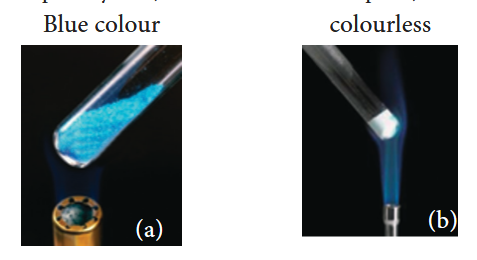
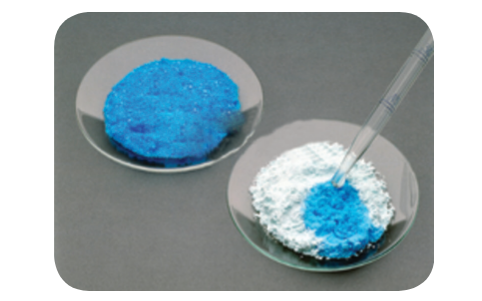
If you add few drops of water or allow it to cool, the colourless anhydrous salt again turns back into blue coloured hydrated salt.
Magnesium sulphate heptahydrate MgSO₄·7H₂O (Epsom salt)#
Its water of crystallization is 7. When magnesium sulphate heptahydrate crystals are gently heated, it loses seven water molecules, and becomes anhydrous magnesium sulphate.
$$ \text{MgSO}_4 \cdot 7\text{H}_2\text{O} \underset{\text{Cooling}}{\stackrel{\text{Heating}}{\rightleftharpoons}} \text{MgSO}_4 + 7\text{H}_2\text{O} $$(Magnesium sulphate heptahydrate) → (Anhydrous Magnesium sulphate)
If you add few drops of water or allow it to cool, the colourless anhydrous salt again turns back into hydrated salt.
HYGROSCOPY#
Certain substances, when exposed to the atmospheric air at ordinary temperature, absorb moisture without changing their physical state. Such substances are called hygroscopic substances and this property is called hygroscopy.
Hygroscopic substances are used as drying agents.
Example:
- Conc. Sulphuric acid (H₂SO₄)
- Phosphorus Pentoxide (P₂O₅)
- Quick lime (CaO)
- Silica gel
DELIQUESCENCE#
Certain substances which are so hygroscopic, when exposed to the atmospheric air at ordinary temperatures, absorb enough water and get completely dissolved. Such substances are called deliquescent substances and this property is called deliquescence.
Deliquescent substances lose their crystalline shape and ultimately dissolve in the absorbed water forming a saturated solution.
Deliquescence is maximum when:
- The temperature is low
- The atmosphere is humid
Examples: Caustic soda (NaOH), Caustic potash (KOH) and Ferric chloride
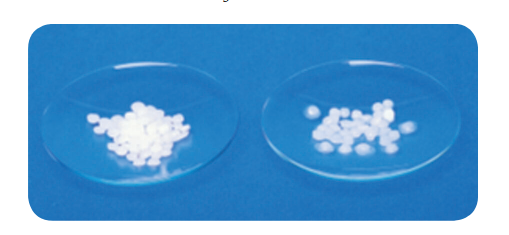
Table 9.3 Difference between hygroscopic substances and deliquescent substances
| Hygroscopic substances | Deliquescence substances |
|---|---|
| When exposed to the atmosphere at ordinary temperature, they absorb moisture and do not dissolve. | When exposed to the atmospheric air at ordinary temperature, they absorb moisture and dissolve. |
| Hygroscopic substances do not change its physical state on exposure to air. | Deliquescent substances change its physical state on exposure to air. |
| Hygroscopic substances may be amorphous solids or liquids. | Deliquescent substances are crystalline solids. |
PROBLEMS BASED ON SOLUBILITY AND PERCENTAGE BY MASS AND VOLUME#
I. Problems based on solubility#
1) 1.5g of solute is dissolved in 15g of water to form a saturated solution at 298K. Find out the solubility of the solute at the temperature.
Solution:
- Mass of the solute = 1.5g
- Mass of the solvent = 15g
2) Find the mass of potassium chloride would be needed to form a saturated solution in 60g of water at 303K? Given that solubility of the KCl is 37g/100g at this temperature.
Solution:
- Mass of potassium chloride in 100g of water in saturated solution = 37g
3) What is the mass of sodium chloride that would be needed to form a saturated solution in 50g of water at 30°C. Solubility of sodium chloride is 36g at 30°C?
Solution: At 30°C, 36g of sodium chloride is dissolved in 100g of water.
∴ Mass of sodium chloride that would be need for 100g of water = 36g
∴ Mass of sodium chloride dissolved in 50g of water =
$$ \frac{36 \times 50}{100} = 18\text{g} $$4) The solubility of sodium nitrate at 50°C and 30°C is 114g and 96g respectively. Find the amount of salt that will be thrown out when a saturated solution of sodium nitrate containing 50g of water is cooled from 50°C to 30°C?
Solution: Amount of sodium nitrate dissolved in 100g of water at 50°C is 114g
∴ Amount of sodium nitrate dissolving in 50g of water at 50°C is =
$$ \frac{114 \times 50}{100} = 57\text{g} $$Similarly amount of sodium nitrate dissolving in 50g of water at 30°C is =
$$ \frac{96 \times 50}{100} = 48\text{g} $$Amount of sodium nitrate thrown when 50g of water is cooled from 50°C to 30°C is 57 - 48 = 9g
II. Problem based on mass percentage#
1) A solution was prepared by dissolving 25g of sugar in 100g of water. Calculate the mass percentage of solute.
Solution:
- Mass of the solute = 25g
- Mass of the solvent = 100g
2) 16 grams of NaOH is dissolved in 100 grams of water at 25°C to form a saturated solution. Find the mass percentage of solute and solvent.
Solution:
- Mass of the solute (NaOH) = 16g
- Mass of the solvent (H₂O) = 100g
(i) Mass percentage of the solute:
$$ \text{Mass percentage of solute} = \frac{16 \times 100}{16+100} = \frac{1600}{116} = 13.79\% $$(ii) Mass percentage of solvent = 100 - (Mass percentage of the solute) = 100 - 13.79 = 86.21%
3) Find the amount of urea which is to be dissolved in water to get 500g of 10% w/w aqueous solution?
Solution:
$$ \text{Mass percentage (w/w)} = \frac{\text{Mass of the solute}}{\text{Mass of the solution}} \times 100 $$$$ 10 = \frac{\text{Mass of the urea}}{500} \times 100 $$$$ \text{Mass of urea} = 50\text{g} $$III. Problem based on volume-volume percentage#
1) A solution is made from 35ml of Methanol and 65ml of water. Calculate the volume percentage.
Solution:
- Volume of the methanol = 35ml
- Volume of the water = 65ml
2) Calculate the volume of ethanol in 200ml solution of 20% v/v aqueous solution of ethanol.
Solution:
- Volume of aqueous solution = 200ml
- Volume percentage = 20%
POINTS TO REMEMBER#
- A solution is a homogeneous mixture of two or more substances.
- An aqueous solution is a solution in which the solvent is water.
- A non-aqueous solution is a solution in which the solvent is a liquid, other than water.
- A solution in which no more solute can be dissolved in a definite amount of the solvent at a given temperature is called saturated solution.
- An unsaturated solution is one that contains less solute than the saturated solution at a given temperature.
- A supersaturated solution is one that contains more solute than the saturated solution at a given temperature.
- Polar compounds are soluble in polar solvents.
- Non-polar compounds are soluble in non-polar solvents.
- In endothermic process, solubility of solid solute increases with increase in temperature.
- In exothermic process, solubility of solid solute decreases with increase in temperature.